Choosing Your Creator Storefront: Shopify vs Stan Store vs fypro.ai
Contents

The Search for the Perfect Creator Storefront
Your content pulls in steady views, real engagement, and an audience that trusts what you say. But if that trust is still only converting into small, one-off payouts, your monetization hasn't caught up with the value you're actually creating. That's usually the moment creators start looking past social platforms for something more permanent—a real home for their business, not just another post in the feed.
The problem is that most tools on the market solve exactly one piece of that puzzle. One gives you an audience insight, another gives you a single monetization feature, and you're left to figure out how the rest of the business fits together on your own.
Shopify for Creators: The Enterprise Trap
Shopify is usually the first name that comes up. It has earned its reputation: merchants processed $115.6 billion in GMV through the platform in Q2 2026 alone (up 32% year over year), with cumulative merchant sales passing $1.8 trillion according to Chargeflow's Shopify market statistics. That's an enterprise-grade backend built to scale—real payment infrastructure, robust inventory tooling, and a proven track record with retail giants.
For a solo creator, though, that scale cuts the other way. Shopify hands you a fully capable store and an entirely empty shelf. It has no visibility into your content, your audience, or what they've already shown interest in—it simply gives you the tools and leaves the merchandising to you.
In practice, that means weeks of setup: designing pages, sourcing products, and configuring settings built for teams rather than one person. Time that would otherwise go into content creation is sucked into managing a backend dashboard.

Stan Store and the Limits of Point Solutions
Stan Store and similar tools exist precisely because Shopify is overkill for a creator who just wants to sell a digital guide or take a booking. For that narrow use case, they are genuinely fast to set up.
The tradeoff is that they stay single-purpose. They handle one slice of the business—a download, a tip, or a calendar link—without building a true brand layer around it.
Because so many creators use the same templates, the pages themselves start to blend together. Recent market data on link-in-bio tools shows roughly 31 million Instagram users on some version of these tools, with one platform alone holding close to 80% of that market. At that scale, a generic bio page doesn't differentiate you; it places you in a lineup with thousands of profiles that look identical, hosted as a sub-account on someone else's platform rather than a presence that's actually yours.
The Hidden Cost of the Fragmented Tech Stack
Piece these tools together and you get a familiar shape: one app for a link page, another for checkout, another for email, and another for analytics—each with its own login and isolated data. It's the same sprawl marketing teams have been complaining about for years, running at creator scale.
The broader software market now counts more than 15,000 marketing tools, and managing a stack like that can feel "more like a SaaS rescue shelter" than a system, as highlighted in Factors.ai's martech stack report.
For a creator running that setup solo, the cost isn't just the subscriptions—it's becoming the integration layer yourself. Your content strategy and your storefront data never actually talk to each other, so you end up guessing what to post and guessing what to sell as two separate decisions, with no clear line showing which views turned into which sales.
The Rise of the Automated Growth Engine
This is the structural gap Fypro was built to close—not another link-in-bio tool, and not a blank storefront template, but one system where content and monetization run on the same account model.
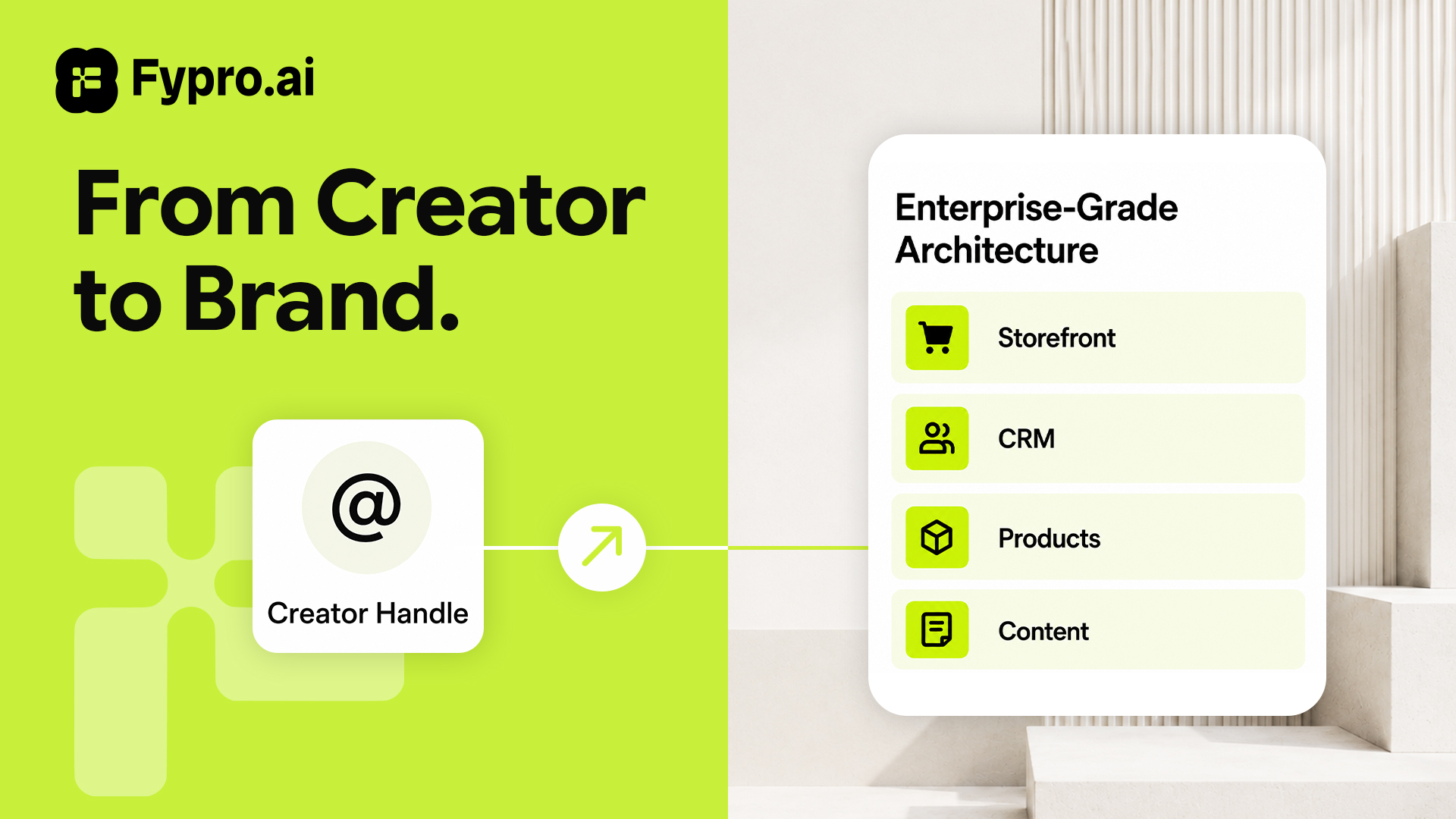
Instead of asking you to configure settings from scratch, it starts with your social handle. Fypro's engine, trained on more than 4 million viral TikTok videos, scans your account and returns a personalized growth plan in under 10 minutes—covering both halves of the business at once: what content will actually grow your audience, and which products fit what that audience already watches you talk about.
True Automation and Full Asset Ownership
From there, the engine executes rather than just advising. In under 7 minutes, Fypro launches four branded pages live on your own custom domain.
A branded homepage
An automated product store
An SEO-ready blog
A dynamic link profile
All pages are styled directly from your actual account data rather than a generic template, and stocked with products matched to your niche with your margins transparently displayed up front.
That margin control matters immensely. In e-commerce affiliate programs, a typical first-order commission runs 10–15% of the sale, according to IREV's affiliate marketing benchmark statistics. Route that same sale through your own storefront instead of a referral link, and you keep the full margin—which is why Fypro creators earn 3x to 5x more on comparable sales volume versus standard affiliate links.
The other critical piece lost under a scattered setup is the customer relationship itself. Sell through a marketplace or an affiliate link and the buyer's email and order history stay locked inside the platform. With Fypro, every purchase writes into a private CRM you control—verified emails, order history, and repeat-buyer signals—fully encrypted, never sold to ad networks, and exportable with a single click.
Stop letting your audience's trust turn into small, one-off payouts on infrastructure you don't own. Enter your handle at fypro.ai and let one engine run your content, storefront, and customer relationships together.